What Is a Tron Wallet Address Check?
A Tron wallet address check is a screening process that analyzes a TRX or USDT (TRC20) wallet for illicit activity, sanctions exposure, and transaction history red flags. The check examines whether funds have passed through mixers, darknet markets, stolen-fund wallets, or addresses linked to scams and sanctioned entities. When you check a Tron address, you receive a risk score that indicates the likelihood of the wallet being flagged by exchanges or frozen by regulators. This screening is part of Know-Your-Transaction (KYT) compliance and helps prevent receiving tainted coins that could lock your account or trigger regulatory action.
Why Check a Tron Address Before Receiving Funds?
Receiving USDT or TRX from a high-risk wallet can result in your exchange account being frozen, your funds being locked, or your wallet being flagged for further investigation. Exchanges and custodians perform AML checks on incoming transactions and may reject or seize deposits linked to illicit sources. If you receive stolen crypto, mixer outputs, or funds from sanctioned entities, you may face compliance holds or permanent account restrictions. Checking a Tron address upfront lets you decline risky transfers and avoid these consequences. A simple AML check Tron screening takes seconds and protects your financial standing.
How to Check a Tron Address: Step-by-Step Process
- Copy the Tron wallet address you want to screen (begins with T and is 34 characters long).
- Visit a trusted AML screening service listed on our verified AML Services page—these tools are designed specifically for crypto wallet screening.
- Paste the address into the search field and select Tron as the blockchain.
- Review the risk score and transaction history report.
- Check for red flags: mixer exposure, darknet links, stolen-fund markers, and sanctions list matches.
- If the score is low or medium and acceptable for your use case, proceed with the transaction.
- If the score is high or critical, decline the transfer or investigate further before accepting.
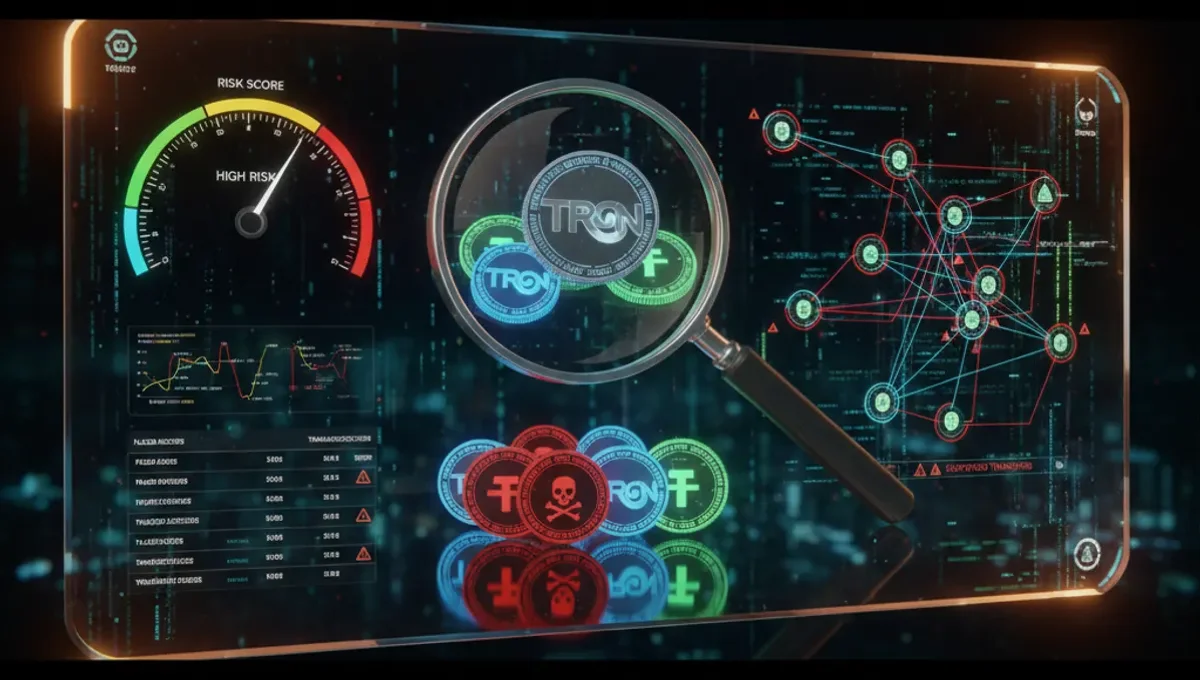
Most AML check services return results in seconds and display a color-coded risk level (green, yellow, red) alongside a detailed breakdown of flagged transactions and counterparties.
Understanding Tron Address Risk Scores and What They Mean
A risk score is a numerical or categorical rating that indicates the likelihood a wallet is connected to illicit activity. Scores typically range from low (0–20%) to critical (80–100%), with intermediate levels for medium and high risk.
Low risk (0–20%): Minimal exposure to illicit sources; generally safe to receive funds. Medium risk (21–50%): Some exposure to mixers or unverified sources; acceptable for most use cases but review transaction history. High risk (51–79%): Significant darknet, mixer, or stolen-fund exposure; consider declining unless you have strong due diligence. Critical risk (80–100%): Direct links to sanctions, scams, or major theft; do not receive these funds.
Your acceptable threshold depends on your compliance posture and exchange requirements. Institutional users typically accept only low-risk wallets, while retail users may tolerate medium risk.
Common Red Flags When You Check a Tron Address
When you perform an AML check on a Tron address, watch for these warning signs:
Mixer exposure: Funds have passed through privacy mixers or tumblers designed to obscure transaction trails. Darknet market links: The wallet has received or sent funds to known darknet marketplace addresses. Stolen funds: The address is flagged as receiving proceeds from hacks, theft, or fraud. Sanctions list match: The wallet owner or counterparty appears on OFAC or other sanctions lists. Gambling platform exposure: Funds linked to unregulated gambling or betting sites. Scam proceeds: The wallet is associated with Ponzi schemes, rug pulls, or investment fraud. Rapid mixing patterns: Multiple rapid transfers designed to obscure the source of funds.
Each red flag increases the risk score. A single mixer exposure may raise the score to medium; multiple flags or sanctions exposure will push it to critical.
How to Avoid Receiving Tainted Coins on Tron
Implement these practices to prevent receiving dirty crypto:
- Screen before accepting: Always check a Tron address before receiving large transfers, especially from unknown counterparties.
- Set a risk threshold: Decide in advance what risk score you will accept (e.g., low only, or low to medium).
- Request wallet history: Ask senders to provide proof of wallet origin or use a service that shows transaction history.
- Use exchange deposit addresses: When possible, receive funds only to exchange addresses, which have their own AML screening.
- Monitor your wallet: After receiving funds, periodically check your own address to ensure it remains low-risk and doesn't accumulate flagged transactions.
- Avoid mixing services: Do not send funds through privacy mixers or tumblers, as this will flag your wallet as high-risk.
- Document due diligence: Keep records of AML checks you performed, in case regulators or exchanges ask for compliance evidence.
These steps reduce the chance of your wallet or account being frozen and help you maintain a clean transaction history.
Using Verified AML Services to Check Tron Addresses
The safest way to check a Tron address is through a trusted, verified AML screening service. Our curated AML Services page lists tools that specialize in blockchain wallet screening, risk scoring, and transaction monitoring. These services integrate with major sanctions lists, theft databases, and darknet monitoring to provide accurate, up-to-date risk assessments. When selecting a service, look for:
Real-time blockchain data: Results based on current transaction history, not outdated snapshots. Multiple data sources: Integration with sanctions lists, theft databases, and darknet intelligence. Transparency: Clear explanation of why a wallet is flagged and which red flags triggered the score. Speed: Results delivered in seconds, not hours. Support: Access to customer support if you have questions about a specific address or score.
Using a verified service ensures your screening is reliable and defensible in case of regulatory inquiry.
Frequently asked questions
Can I check a Tron address for free?
Many AML screening services offer free basic checks with limited detail, showing only a risk score or summary. Full reports with transaction history and counterparty analysis often require a paid subscription. Our AML Services page lists both free and paid options so you can choose based on your needs and budget.
What does it mean if a Tron address is flagged as high-risk?
A high-risk flag indicates the wallet has exposure to mixers, darknet activity, stolen funds, or other illicit sources. Receiving funds from a high-risk address may result in your exchange account being frozen or your deposit being rejected. You should decline the transfer or investigate further before accepting.
How long does a Tron wallet address check take?
Most AML screening services return results in seconds to a few minutes. The check analyzes the wallet's transaction history against multiple data sources in real-time. Delays typically occur only if the service is under heavy load or if you request a detailed historical analysis.
Will checking a Tron address flag my own wallet?
No. Checking an address for risk does not flag or affect your wallet. You are only analyzing the target wallet's history. Your own wallet remains unaffected unless you receive funds from a flagged address or send funds through a mixer.
What should I do if I already received tainted coins?
If you receive flagged funds, do not send them to an exchange immediately, as they may be frozen. Document the transaction and the AML check result. Contact the sender to understand the source. If the coins are stolen or sanctioned, report the incident to your exchange and consider consulting a compliance advisor before moving the funds.