What Is an AML Check and Why It Matters for Tron
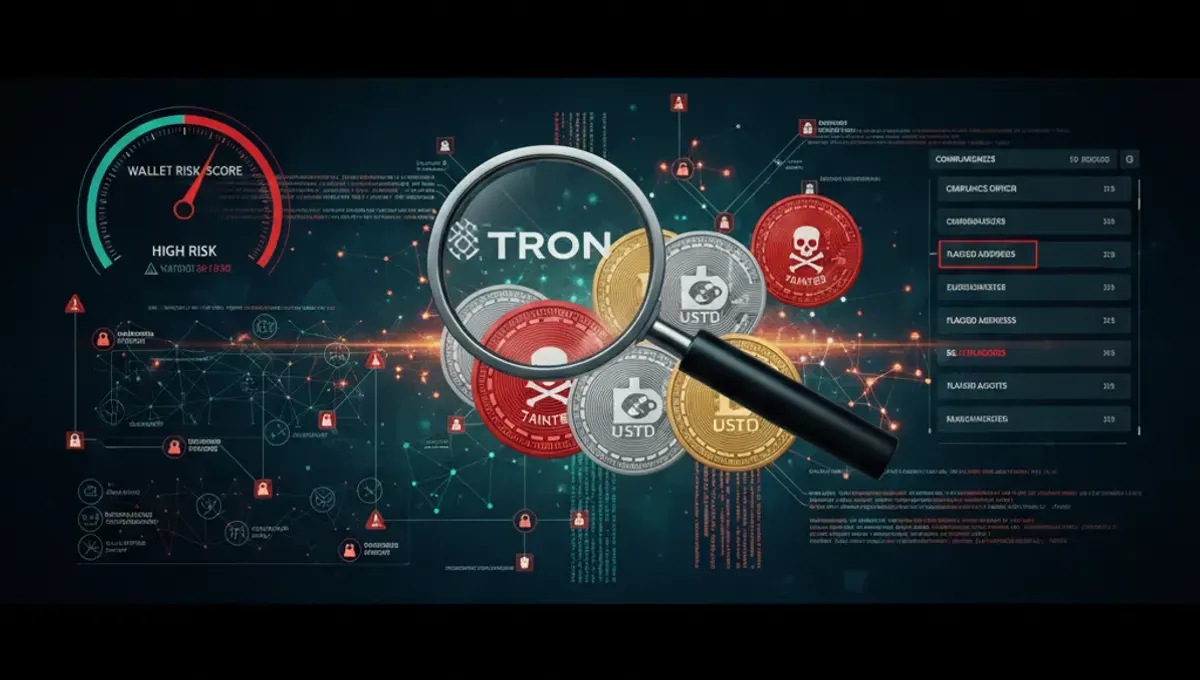
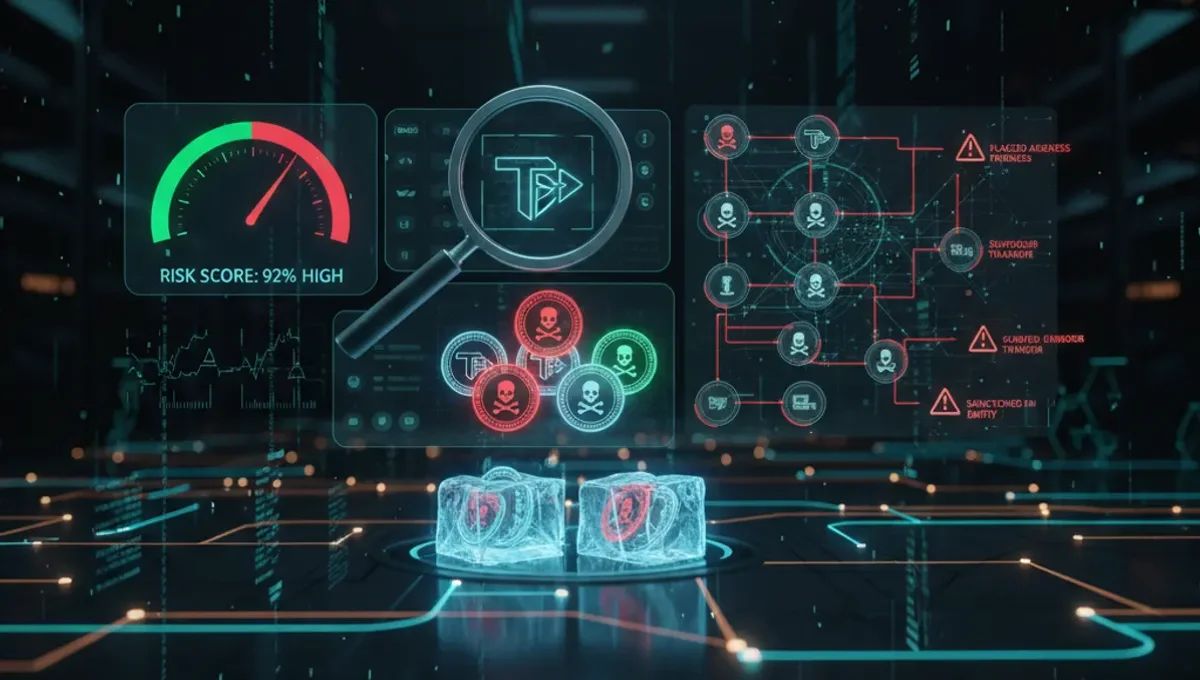
An AML (Anti-Money Laundering) check analyzes a blockchain wallet's transaction history to assess compliance risk. On Tron, this means examining TRX and USDT transfers, tracing funds back to their origin, and flagging exposure to known risk categories: mixers, darknet markets, stolen funds, scams, sanctioned entities, and gambling platforms. Exchanges and custodians use AML checks to meet regulatory requirements. For individuals, an AML check before receiving funds prevents you from unknowingly accepting dirty crypto—coins linked to illicit activity that exchanges may freeze or reject. A single tainted transaction can taint your entire wallet, making it harder to deposit or withdraw on regulated platforms.
How the AML Check Process Works for Crypto Wallets
The AML check process follows these steps: First, the screening tool ingests your wallet address and queries blockchain data to retrieve all incoming and outgoing transactions. Second, it maps the transaction graph—tracing funds backward to identify the original source and forward to see where coins moved. Third, it cross-references addresses against known risk lists: darknet marketplaces, mixer services, sanctioned entities, and stolen-fund databases. Fourth, it assigns a risk score based on exposure depth and recency. Finally, it generates a report detailing risk factors, flagged counterparties, and recommended actions. The entire AML check crypto process typically completes in seconds to minutes. Most services also offer ongoing transaction monitoring, alerting you if new high-risk activity appears on your wallet.
AML Check Requirements: What Exchanges and Services Look For
Exchanges and custodians have varying AML check requirements depending on jurisdiction and transaction size. Most require that incoming wallets pass a basic risk screening before deposit. Common thresholds include: wallets with low or medium risk scores are usually accepted; wallets flagged as high-risk or very high-risk may be rejected or require manual review; wallets with direct exposure to sanctioned entities are typically blocked. Some platforms require an AML check fee or charge higher fees for high-risk deposits. Regulatory frameworks like FATF guidance and local AML/KYC rules shape these policies. If your Tron wallet fails an AML check, you may need to provide proof of legitimate fund origin (transaction receipts, exchange statements) or use a different wallet. Understanding your exchange's specific AML check requirements before sending funds saves time and prevents deposit rejections.
How to Check a Tron Wallet: Step-by-Step AML Screening
To perform an AML check on a Tron wallet, follow these steps:
- Obtain the wallet address: Copy the full TRX or USDT wallet address (starts with T on Tron).
- Choose a screening service: Visit our curated AML Services page to find verified wallet screening tools that support Tron.
- Enter the address: Paste the wallet address into the screening tool's search field.
- Review the risk report: The tool will display a risk score, flagged counterparties, transaction patterns, and exposure categories.
- Interpret the results: Check whether the wallet has exposure to mixers, darknet markets, or sanctioned entities.
- Decide on next steps: If risk is low or acceptable, proceed with the transaction; if risk is high, investigate further or decline.
Most AML check services show results instantly. Some offer detailed reports for a fee; others provide basic screening free. For high-value or sensitive transactions, use a paid service for comprehensive analysis and audit trails.
Understanding AML Risk Scores and What They Mean
AML risk scores typically range from 0 to 100 or use categorical labels: low, medium, high, and very high. A low risk score (0–20) indicates minimal exposure to known illicit sources and is generally safe for exchange deposits. A medium risk score (21–50) suggests some exposure to higher-risk addresses or mixing activity but may still be acceptable depending on your exchange's policy. A high risk score (51–80) flags significant exposure to darknet markets, stolen funds, or sanctioned entities and often triggers manual review or rejection. A very high risk score (81–100) indicates direct or recent exposure to major risk categories and is typically blocked by regulated exchanges. Risk scores also consider recency: recent exposure carries more weight than old transactions. When evaluating a Tron wallet's risk score, also examine the specific risk factors listed in the report, not just the number. A wallet with old mixer exposure may be lower-risk than one with recent darknet activity.
AML Check Fee: Cost and Pricing Models
AML check fees vary by service and depth of analysis. Many platforms offer a basic AML check crypto wallet screening for free, providing a risk score and summary of flagged counterparties. Free checks typically cover standard risk categories and are sufficient for routine wallet verification. Paid AML checks range from a few dollars to higher amounts for enterprise-grade screening and include detailed transaction graphs, historical analysis, and ongoing monitoring. Some services charge per check; others offer subscription models with unlimited checks. When comparing AML check fees, consider what's included: basic risk score, detailed counterparty mapping, transaction history depth, and monitoring duration. For individuals checking a single wallet before receiving funds, a free or low-cost check usually suffices. For businesses processing multiple wallets or requiring audit trails, a paid service with comprehensive reporting is worth the investment. Our AML Services page lists options at different price points to help you choose based on your needs.
What to Do If Your Tron Wallet Is Flagged as High-Risk
If an AML check flags your Tron wallet as high-risk, take these steps: First, review the specific risk factors in the report—identify which transactions or counterparties triggered the flag. Second, determine if the exposure is legitimate: old activity from a reputable exchange, a one-time transaction with a mixer for privacy, or something else. Third, gather supporting documentation: exchange statements, invoices, or transaction receipts proving legitimate fund origin. Fourth, contact your exchange's compliance team and provide context; many will review flagged wallets manually if you can explain the activity. Fifth, consider moving clean funds to a new wallet with no high-risk exposure if the flagged wallet cannot be cleared. Avoid using mixers or moving funds through suspicious addresses, as this deepens the risk flag. If your wallet remains blocked after review, you may need to use a different wallet or exchange. Proactively running an AML check before receiving large transfers helps you avoid this situation.
Frequently asked questions
How long does an AML check on a Tron wallet take?
Most AML checks complete in seconds to a few minutes. The screening tool queries blockchain data, maps transaction history, and cross-references risk lists in real time. Some detailed or enterprise reports may take longer, but basic wallet screening is nearly instant. Delays usually occur only if the wallet has an extremely large transaction history or the service is under heavy load.
Can I do a free AML check on a Tron wallet?
Yes, many AML screening services offer free basic checks that provide a risk score and summary of flagged counterparties. Free checks are usually sufficient for routine wallet verification before receiving funds. Paid services offer more detailed analysis, transaction graphs, and ongoing monitoring. Check our AML Services page for verified free and paid options that support Tron.
What happens if I receive USDT on a flagged Tron wallet?
If you receive USDT on a high-risk Tron wallet, the coins themselves may be flagged as tainted. When you try to deposit them on an exchange, the platform may reject the transaction, freeze your account, or require additional verification. In severe cases, exchanges may permanently ban your account. This is why checking a wallet before receiving funds is critical—it prevents you from unknowingly accepting dirty crypto.
Does an AML check cost money?
Basic AML checks are often free. Paid AML checks typically cost a few dollars to higher amounts depending on the service and depth of analysis. Subscription models offer unlimited checks for a monthly fee. Compare pricing on our AML Services page to find options that fit your budget and screening needs.
What risk categories does an AML check look for on Tron?
AML checks screen for exposure to mixers, darknet markets, stolen funds, scams, sanctioned entities, gambling platforms, and other illicit sources. On Tron, this includes TRX and USDT transfers linked to these categories. The screening tool flags addresses with direct or indirect exposure and assigns a risk score based on the severity and recency of the exposure.