What Does It Mean to Look Up a Crypto Wallet
Looking up a crypto wallet involves retrieving and analyzing data associated with a public blockchain address. Every transaction on Bitcoin, Ethereum, Tron, and other blockchains is recorded permanently, so any wallet address can be inspected. A basic lookup shows the wallet's balance, transaction history, and connected addresses. A deeper lookup—what compliance teams call wallet screening—also reveals whether the address has received funds from high-risk sources like mixers, darknet markets, stolen funds, or sanctioned entities. The crypto wallet number (the public address itself) is the starting point; from there, you trace its activity and connections. This is why understanding how to look up crypto wallets is essential before sending or receiving significant amounts.
Blockchain Explorers: The First Step in Wallet Lookup
A blockchain explorer is a public database that lets you search any wallet address and see its full transaction record. For Bitcoin, explorers like Blockchain.com or Blockchair display the address, balance, transaction count, and linked addresses. For Ethereum and Tron (TRX/USDT), explorers like Etherscan and Tronscan serve the same purpose. To look up a wallet: enter the public address into the explorer's search bar, and you'll see the balance, all incoming and outgoing transactions, timestamps, and amounts. You can also see which other addresses have interacted with it. This transparency is a core feature of blockchain technology, but it also means your transaction history is permanently visible. Explorers are free and require no login, making them the easiest first step in wallet verification.
How to Check a Wallet for Risk Factors and Tainted Coins
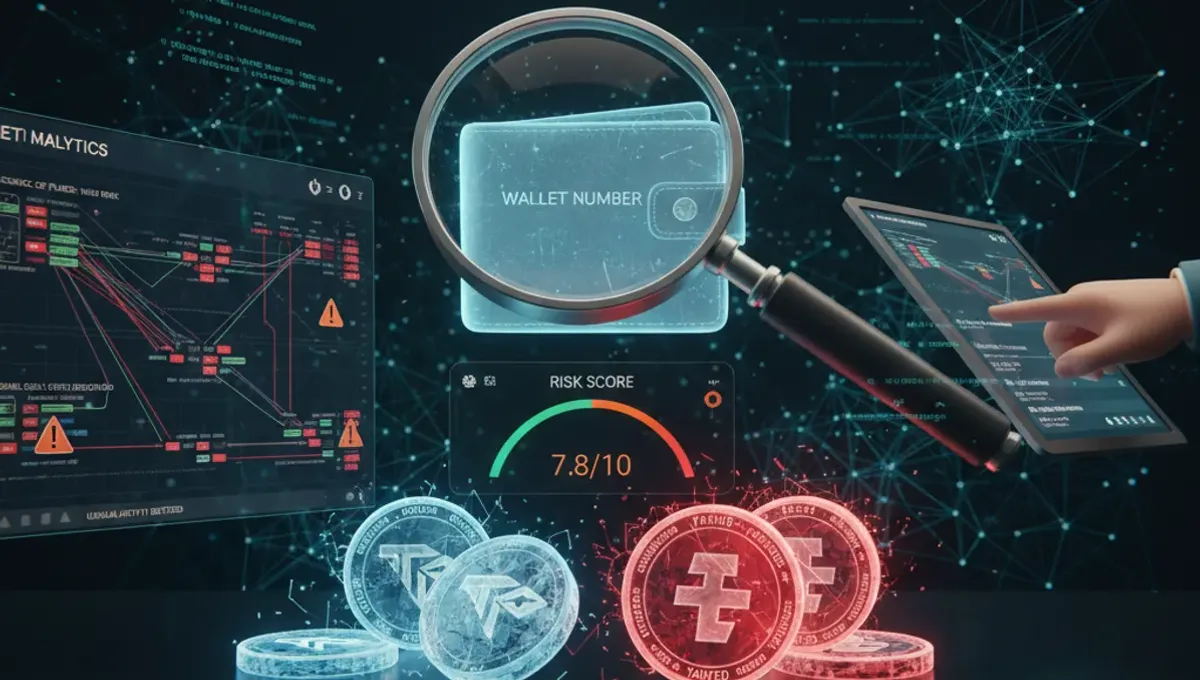
A basic explorer lookup shows activity but not risk. To properly screen a wallet before receiving funds, you need to check for tainted coins—funds originating from theft, scams, ransomware, or sanctions violations. Risk factors include: funds flowing from known mixers (privacy tools used to obscure transaction trails), darknet market addresses, stolen cryptocurrency, sanctioned entities or countries, gambling platforms, and Ponzi schemes. Manual tracing is time-consuming and error-prone. This is where AML (Anti-Money Laundering) wallet screening tools come in. These services cross-reference wallet addresses against known risk databases and assign a risk score. A wallet with a low risk score has clean transaction history; a high score indicates exposure to illicit activity. Before accepting a large transfer, checking the wallet's risk profile protects you from compliance violations and potential account freezes at exchanges.
Understanding Crypto Wallet Risk Scores and What They Mean
A risk score is a numerical rating assigned to a wallet based on its transaction history and counterparty exposure. Scores typically range from 0 to 100, where 0 is clean and 100 is high-risk. A wallet with a score below 20 is generally considered low-risk and safe to receive funds from. Scores between 20 and 50 indicate moderate risk—the wallet may have received funds from questionable sources but not necessarily illicit ones. Scores above 50 signal elevated risk: the wallet has clear exposure to mixers, darknet activity, or sanctions lists. Scores above 80 are severe warnings. Risk scoring considers factors like transaction frequency, address clustering (grouping related addresses), time since first activity, and connections to known bad actors. Different AML services may score the same wallet differently based on their data sources and algorithms. Always cross-reference multiple services before making a final decision, and consult the verified AML services listed on Cryptohamlet's curated directory for trusted screening options.
Step-by-Step: How to Look Up and Screen a Wallet Before Receiving Funds
Follow this process before accepting a crypto transfer:
- Ask the sender for their wallet address.
- Enter the address into a blockchain explorer (Etherscan for Ethereum, Tronscan for Tron, Blockchain.com for Bitcoin) to verify the balance and recent activity.
- Check the wallet's risk score using an AML screening service—Cryptohamlet's directory lists verified providers that offer wallet checks.
- Review the risk report: look for flags like mixer connections, darknet exposure, or sanctions hits.
- If the score is below 30 and no major red flags appear, the wallet is likely safe.
- If the score is above 50 or shows darknet/mixer activity, decline the transfer or investigate further.
- Document the screening result for your records. This process takes 5–10 minutes and can prevent you from receiving frozen or sanctioned funds that exchanges will reject or that trigger compliance holds on your account.
Common Red Flags When Looking Up Crypto Wallets
Certain patterns indicate a wallet is high-risk and should be avoided. Red flags include:
- Recent large deposits from known mixers or tumblers—these obscure the origin of funds.
- Transactions linked to darknet marketplace addresses—a sign of illicit activity.
- Wallet flagged on sanctions lists (OFAC, EU, UN)—receiving from these is illegal in many jurisdictions.
- Rapid movement of funds in and out—typical of money laundering or theft.
- Wallet connected to known scams or Ponzi schemes—your funds may be stolen.
- Extremely old wallet with no recent activity suddenly receiving large sums—potential account compromise.
- Wallet address that appears in public theft reports or ransomware payment lists. If you see any of these patterns, do not accept the transfer. The cost of a few minutes of screening is far less than the cost of frozen funds or regulatory penalties.
How Exchanges Freeze Accounts and Why Wallet Screening Matters
When you deposit tainted cryptocurrency to an exchange, compliance systems flag it during deposit processing. Exchanges run their own AML checks on incoming transactions. If the deposit is linked to sanctions, theft, or darknet activity, the exchange freezes the deposit and may suspend your account pending investigation. In some cases, frozen USDT or other stablecoins are permanently locked, and you lose access to the funds. This can take weeks or months to resolve, even if you claim ignorance. Exchanges are legally required to screen deposits under AML/KYC (Know Your Customer) regulations. By screening wallets before you receive funds, you avoid this scenario entirely. It's a simple precaution that saves time, money, and compliance headaches. Start with the trusted AML services listed on Cryptohamlet to verify any wallet before accepting a transfer.
Frequently asked questions
Can I look up a crypto wallet without using a blockchain explorer
No, blockchain explorers are the primary public tool for wallet lookup. They are free and require no account. However, explorers only show transaction history, not risk assessment. For full screening, you need an AML service that checks for tainted coins and sanctions exposure.
What is a crypto wallet number and how do I find it
A crypto wallet number is the public address—a long string of characters unique to each wallet. You can find it in your wallet app under 'Receive' or 'Address.' Share only the public address, never your private key. Any public address can be looked up in a blockchain explorer.
How long does it take to look up and screen a crypto wallet
A basic lookup in a blockchain explorer takes seconds. Checking the wallet's risk score through an AML service takes 1–5 minutes depending on the service. Full compliance screening may take longer. Most urgent checks can be completed in under 10 minutes.
What crypto wallet fees should I expect when looking up addresses
Blockchain explorers are free. Most AML wallet screening services offer free basic checks with limited detail, or paid tiers for detailed risk reports. Cryptohamlet's directory lists both free and paid options so you can choose based on your needs.
Is it safe to share my wallet address when someone wants to look it up
Yes, sharing your public wallet address is safe. It only reveals your transaction history, not your funds or identity. Never share your private key, seed phrase, or recovery codes. Your public address is meant to be shared so others can send you cryptocurrency.