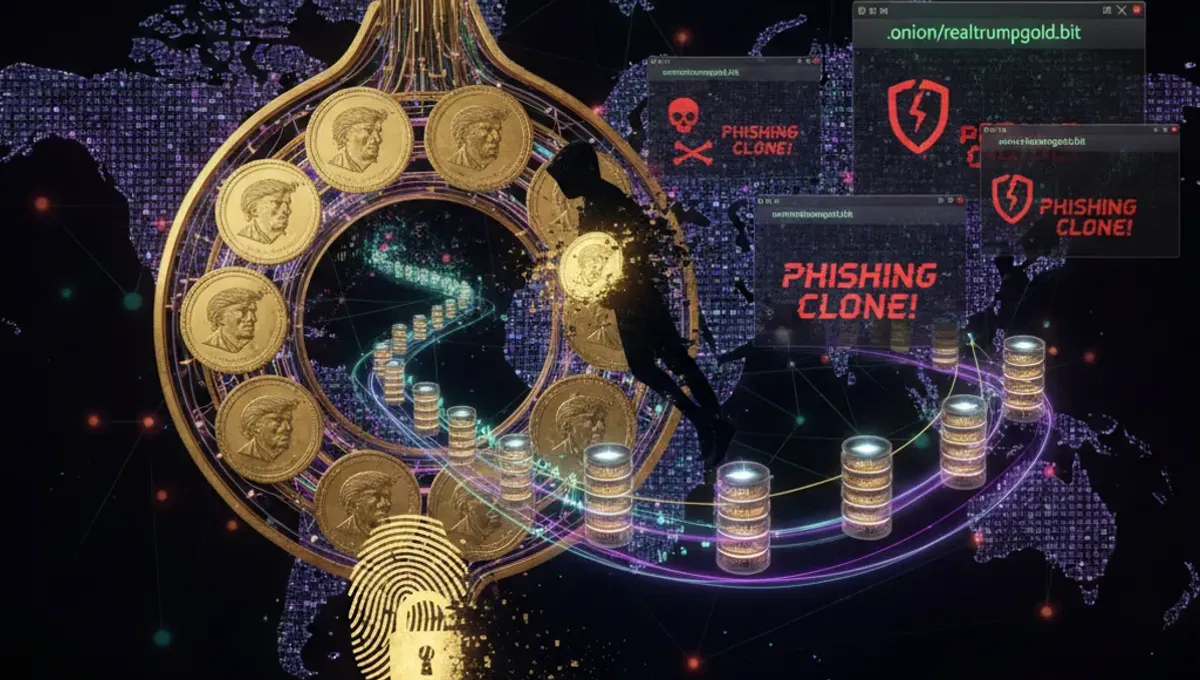
Why Phishing Clones Are Rampant in Crypto
Unlike traditional finance, crypto transactions are irreversible. Once you send coins to a phishing site or fake wallet address, recovery is nearly impossible. Scammers exploit brand recognition by creating near-identical copies of legitimate projects, exchanges, and services. The Real Trump Coins GOLD token case demonstrates how attackers use social media compromise and domain spoofing to impersonate official channels.
Key vulnerabilities that make crypto phishing effective:
- No centralized authority to verify legitimacy
- Domain registration is often anonymous
- Social media accounts can be compromised or cloned
- Token symbols and logos are not trademarked in blockchain systems
- Users often rush and skip verification steps
How to Verify a Legitimate Crypto Project
Before sending funds or connecting your wallet, perform these checks:
1. Verify the Official Domain
- Visit the main website directly—never click links from social media or emails
- Check the domain registration using public WHOIS databases
- Look for recent registration dates or recent transfers (red flags for stolen domains)
- Verify HTTPS certificates match the claimed organization
- Check if the domain includes unusual subdomains or slight misspellings (e.g., "realtrum-coins.net" instead of "realtrumpcoin.com")
2. Cross-Reference Social Media Accounts
- Confirm that Twitter/X, Telegram, Discord accounts are listed on the official website
- Check account creation dates—established projects have years-old accounts
- Look for verified badges (though these can be faked on some platforms)
- Search for official announcements about new products on all verified channels
- If an account claims to announce a new token, verify the announcement appears on all official channels, not just one compromised account
3. Examine Token Metadata On-Chain
- Query the blockchain directly using an explorer (Etherscan, Tronscan, etc.)
- Check the contract deployment address and timestamp
- Review token supply and distribution—excessive concentration in a few wallets is suspicious
- Look for whether the project announced the token through verified channels before its deployment
- Verify the contract matches the official GitHub repository (if one exists)
Red Flags: When to Reject a Project Immediately
Stop and walk away if you notice:
- The website was registered days ago
- Social media accounts claiming to be "official" have no posting history before the token launch
- The project demands wallet private keys or seed phrases
- Links in emails or DMs direct you to a website (legitimate projects don't do this)
- Token supply is locked in one wallet or dev address
- The official announcement contradicts the token launch (like Real Trump Coins denying the GOLD token)
- Grammar and spelling errors on the official site (suggests impersonation)
- No GitHub repository or code is closed-source with vague claims of security
Authenticating Onion Mirrors and Darknet Services
If a project operates a .onion mirror, verification is critical:
Verify .onion Address Authenticity
- Official .onion addresses should be announced on multiple verified channels (main site, GitHub, social media)
- Download the Tor Browser from the official source only
- Bookmark the official .onion address—never search for it
- v3 onion addresses are 56 characters long; shorter v2 addresses are deprecated and less secure
- Check the onion address against the project's official documentation to the character
Confirm PGP Signatures
- Legitimate darknet projects publish their PGP public key on multiple channels
- Verify that announcements are signed with the published key
- Import the key into a PGP tool and authenticate the signature
- If a signature fails to verify, the announcement is not authentic
- Never trust a PGP key without verifying it through multiple independent sources
How Wallet Address Spoofing Works
Attackers don't always clone entire websites. Often, they compromise a single weak point:
- Social media account takeover: An admin's password is breached; scammers post a fake deposit address
- Email interception: A confirmation email redirects users to a phishing wallet address
- DNS hijacking: The domain resolves to a scammer's server (rare but devastating)
- QR code replacement: Printed materials or screenshots show a fake wallet address
To protect yourself:
- Never deposit funds based on a wallet address found in a social media post
- Always verify addresses directly on the official website and cross-check with blockchain explorers
- Send a small test transaction first; if it arrives at the correct destination, the address is legitimate
- Use hardware wallets to sign transactions offline, reducing exposure to compromised computers
Frequently Asked Questions
How do I know if a .onion address is real vs. a phishing clone?
Phishing clones often use similar words or numbers. Legitimate projects announce their .onion addresses only on verified channels (official website, GitHub, PGP-signed announcements). Bookmark the address immediately after verification—never search for it on DuckDuckGo or other engines, as results may include clones. Check the address character-by-character against multiple sources.
What should I do if I suspect I've visited a phishing clone?
Immediately stop entering credentials or connecting your wallet. Clear your browser cache and cookies. If you've already provided sensitive information, assume your account is compromised—change passwords and enable two-factor authentication on all related services. Do not send any funds. Report the URL to the official project and the platform hosting it.
Is it safer to use a VPN, Tor, or I2P when accessing crypto wallets?
Tor provides superior anonymity for darknet access but is slower; it's valuable if you need to hide your IP from surveillance. VPNs are faster but rely on the provider's logging practices—a compromised VPN can expose your real IP. I2P is designed for peer-to-peer communication and is less suitable for accessing clearnet wallets. For wallet access, use Tor only if you need anonymity; otherwise, HTTPS suffices for privacy against eavesdropping.
How do I check if a token's supply is concentrated in suspicious wallets?
Use blockchain explorers to view the top token holders. If the project's team, marketing, and liquidity pools together control more than 50% of supply, it's a red flag for a rug pull. Legitimate projects distribute tokens across community members and lock liquidity. Review the project's tokenomics whitepaper to match holder addresses with announced distributions.
Practical Takeaways
Phishing and fraud are not accidents—they're engineered to exploit trust and urgency. The Real Trump Coins GOLD token dispute shows that even well-known brands can be impersonated. Before interacting with any crypto project:
- Verify the official domain and cross-reference all social media accounts
- Check token metadata on-chain to confirm legitimacy
- Never click links from external sources; navigate directly to the official website
- For darknet access, verify .onion addresses and PGP signatures independently
- Send test transactions to confirm wallet address authenticity
- If a major announcement contradicts official channels, assume compromise
Taking five minutes to verify a project saves you from losing your funds to sophisticated fraud.
Source: Cointelegraph