What HKMA's Agentic AI Initiative Means
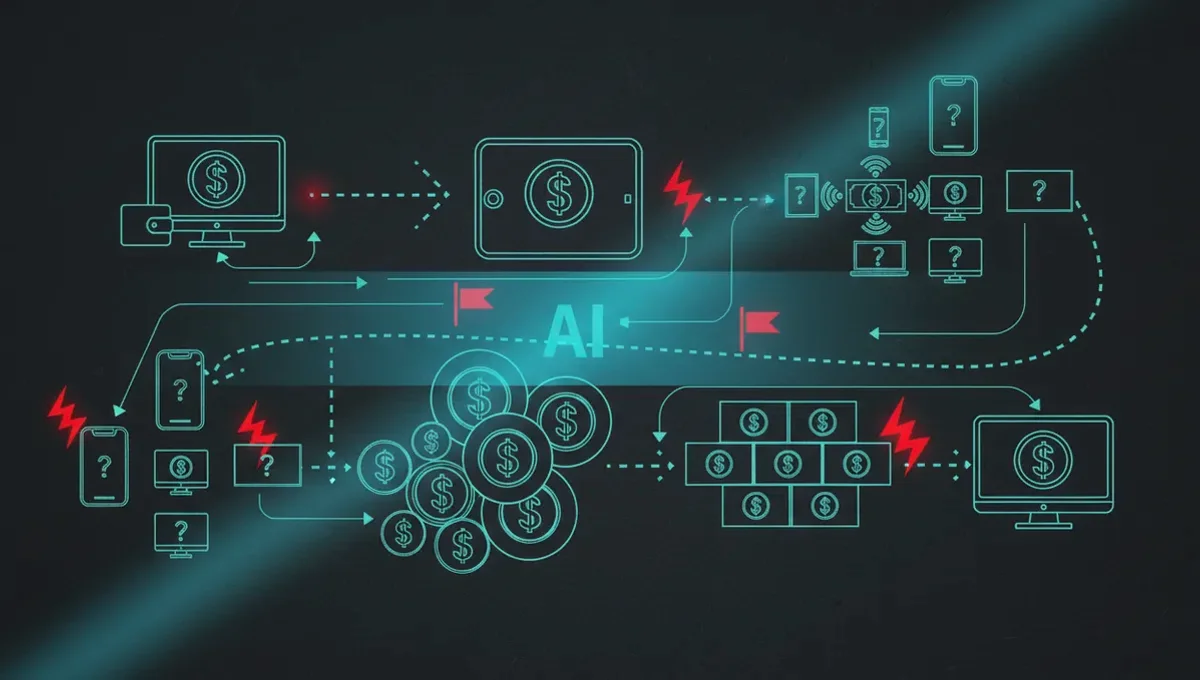
The Hong Kong Monetary Authority (HKMA) announced that it is exploring agentic artificial intelligence to strengthen detection of crypto-related financial crime. According to HKMA Executive Director Raymond Chan, these AI systems would analyze both onchain blockchain transfers and offchain customer transaction histories to identify anomalies that suggest money laundering, sanctions evasion or other illicit activity. Unlike passive rule-based filters, agentic AI operates autonomously, learning patterns over time and adjusting detection thresholds without human intervention for each alert.
This represents a significant upgrade from traditional compliance systems, which rely on static rule sets and high false-positive rates. Hong Kong, home to a substantial crypto derivatives and spot trading sector, faces mounting pressure to balance innovation with enforcement. The HKMA's move reflects a recognition that manual review and legacy AML platforms cannot keep pace with the volume and speed of blockchain transactions.
How Agentic AI Differs From Current Compliance Tools
Existing AML platforms typically work by checking transactions against watchlists, flagging round-number transfers, or alerting on addresses linked to sanctioned entities. These systems are transparent but rigid: they generate thousands of false positives and require analysts to manually investigate each one. Agentic AI introduces a different paradigm. These systems can observe behavioral patterns across a customer's entire history, correlate onchain wallet movements with offchain banking data, and refine their own alert criteria based on outcomes of previous investigations.
For example, a traditional system might flag every transfer over a certain threshold to a new address. An agentic AI system would learn that a customer's legitimate business operations involve frequent large transfers to different addresses, and adjust its scoring accordingly. At the same time, it could detect subtle indicators that a previous alert resolved as a false positive, and lower the priority of similar patterns in future alerts. The key difference is autonomy: the agent makes decisions and adapts without waiting for a human to rewrite rules.
Onchain and Offchain Data Integration
Raymond Chan's statement emphasized that the HKMA's approach combines two data streams that traditional compliance teams often struggle to correlate: onchain blockchain activity and offchain customer transaction records. Onchain data includes every wallet address, token transfer and smart contract interaction visible on the ledger. Offchain data covers bank deposits, wire transfers, credit card activity and other financial records held by regulated institutions.
The power of integrating these sources lies in the ability to trace a complete financial journey. A customer might appear legitimate if monitored only at the exchange level, but if an AI system can link their exchange account to a blockchain address, then trace that address to a wallet known to receive ransom payments or stolen funds, the full picture emerges. This approach also helps detect layering: the practice of splitting illicit funds across multiple transactions and wallets to obscure their origin. An onchain-focused audit might miss the pattern; offchain records alone cannot see it. Together, they reveal structural anomalies that either source alone would miss.
Reality Check: What Regulators Actually Know About Onchain Detection
Three key realities shape the limits and possibilities of what the HKMA's agentic AI can achieve:
Tor Project documentation and security research on blockchain privacy show that onchain monitoring, while detailed, is only as useful as the number of addresses that can be reliably linked to real identities. Pseudonymity on blockchains means that even complete transaction data is incomplete without identity resolution. Why it matters: AI systems trained on historical data will inherit blind spots if address ownership records are poor or stale.
Law enforcement and financial intelligence unit case files, published in regulatory guidance and sanctions enforcement reports, demonstrate that sophisticated layering across multiple blockchains, decentralized exchanges and mixer services can defeat single-chain analysis. Why it matters: agentic AI designed only to monitor Tron or Bitcoin separately may miss cross-chain money flows, and the HKMA's effectiveness depends on whether its scope extends to analyzing activity on multiple ledgers and DEX platforms simultaneously.
Academic research on machine learning in financial crime detection (published by institutions like RAND and the World Bank) shows that AI systems trained on historical compliance data often exhibit bias: they learn to flag transactions that look like past investigations, not necessarily transactions that pose present risk. Why it matters: if the HKMA's training data reflects past enforcement priorities or regional stereotypes, agentic AI could perpetuate those biases at scale and at higher cost.
Implications for Crypto Users and Exchanges
For Hong Kong-based exchanges and custody providers, the HKMA's move signals that compliance automation will become a regulatory expectation, not an option. Platforms that do not invest in real-time AML analytics will face pressure to upgrade. For individual users, the integration of onchain and offchain monitoring means that the privacy boundary between blockchain addresses and banking identity is narrowing. Transfers from an exchange to a personal wallet, then to a mixer service, then to another exchange, will increasingly leave a detectable trail if all entities in the chain report to regulators.
This does not mean all privacy is lost. Techniques such as using non-custodial wallets, avoiding regulated on and off-ramps, or using privacy coins exist, but they carry legal and practical trade-offs. The HKMA's agentic AI is designed to make those trade-offs increasingly obvious and costly.
What This Means for the Broader AML Landscape
Hong Kong's exploration of agentic AI for crypto compliance is not an isolated experiment. Regulators in the EU, US and Singapore are pursuing similar automation. The convergence suggests that within 18 to 36 months, onchain transaction monitoring powered by machine learning will become a baseline expectation for regulated exchanges and custodians worldwide. Platforms that have relied on periodic manual reviews or simple rule engines will fall behind in demonstrating AML readiness.
For security researchers and privacy advocates, this trend raises questions about data retention, false positive rates and appeal mechanisms. If an agentic AI system automatically restricts an account based on a behavioral score, what recourse exists for the customer. The HKMA has not yet published details on transparency or review procedures. Clarity on these points will be essential before deployment.
Take One Step Toward Compliance Awareness
If you operate a crypto business or custody service in or with customers in Hong Kong, begin auditing your current AML procedures against the scenario HKMA has described: assume that your customers' onchain activity and offchain banking history will soon be analyzed together by AI systems, and that anomalies will be flagged automatically. Document your onboarding process, transaction review protocols and risk scoring. If you are an individual user concerned about how your transactions are monitored, review the regulatory guidance on your exchange's compliance page; understanding the current rules is the first step to making informed choices about which platforms and techniques fit your needs.
Source: The Block