What Are the Core Concepts Behind AML Transaction Monitoring?
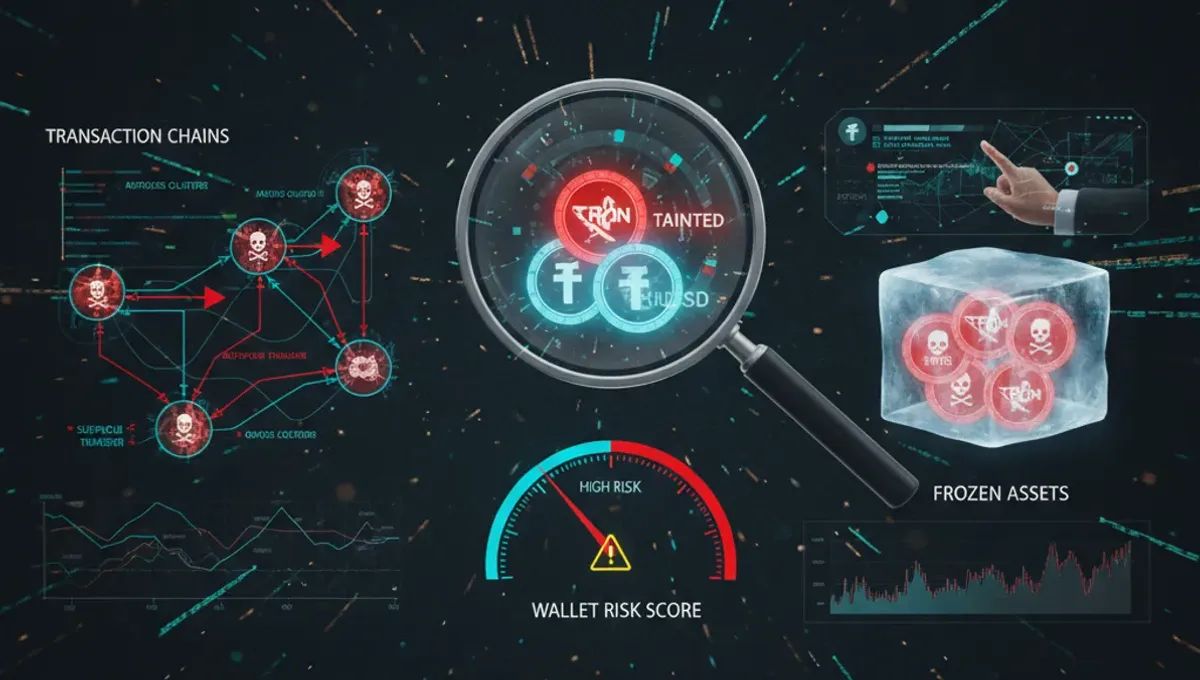
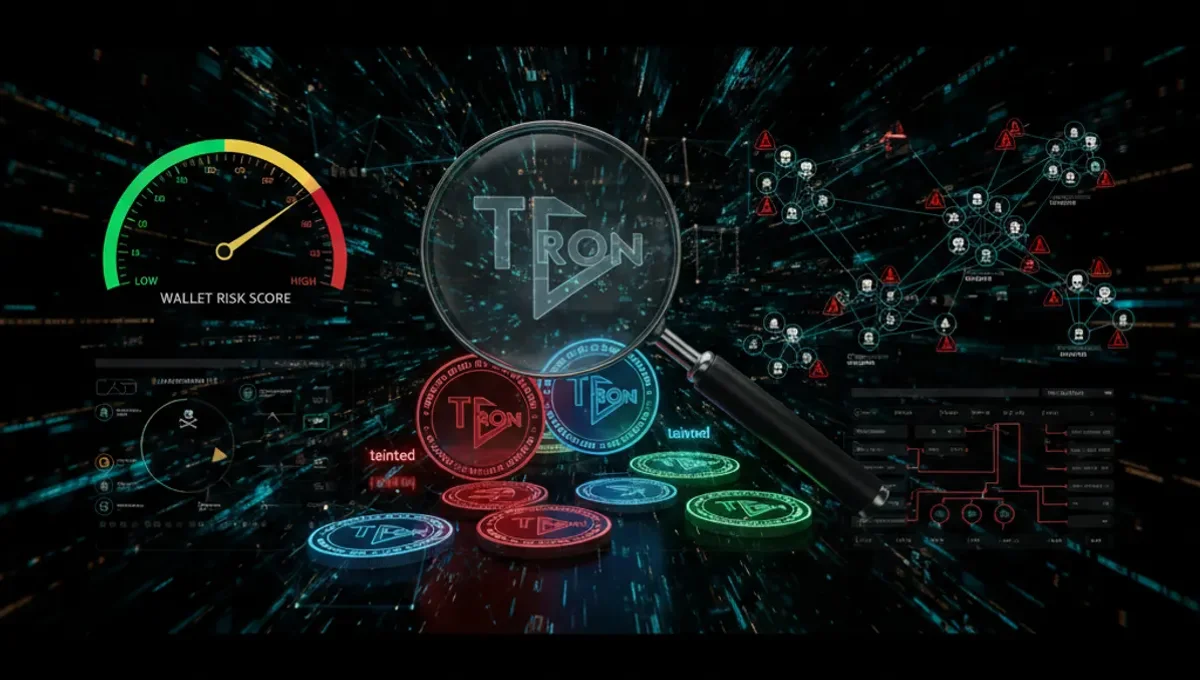
AML transaction monitoring is the process of analyzing financial flows to identify patterns consistent with money laundering, sanctions evasion, or terrorist financing. In traditional banking, this means flagging large wire transfers, rapid account movements, or activity inconsistent with a customer's profile. In crypto, blockchain transaction monitoring extends this to on-chain activity: tracking wallet-to-wallet transfers, identifying mixing services, detecting darknet market exposure, and screening for sanctioned addresses. Employers expect candidates to understand that cryptocurrency transaction monitoring differs from traditional monitoring because transactions are pseudonymous, immutable, and globally visible on the ledger. You should be able to explain why a single tainted coin moving through multiple wallets can trigger alerts across compliance teams, and how risk scores are assigned based on transaction history, counterparty reputation, and source of funds.
Common Interview Questions on AML Transaction Monitoring Rules
Interviewers often ask: 'Describe the typical AML transaction monitoring rules your organization would enforce.' A strong answer covers threshold-based rules (e.g., flag all transactions over a certain amount), behavioral rules (sudden changes in transaction patterns), and entity-based rules (transactions involving sanctioned addresses, known mixers, or darknet markets). You should mention that AML transaction monitoring rules vary by jurisdiction and institution, but generally include: monitoring for structuring (breaking large amounts into smaller transfers to evade detection), rapid movement of funds between accounts, transfers to high-risk jurisdictions, and activity linked to known fraud or theft. Be prepared to discuss how rules are tuned to reduce false positives while catching genuine threats. Mention that crypto transaction monitoring requires additional rule layers: checking for CoinJoin or Tornado Cash exposure, identifying stolen funds through blockchain analytics, and screening against OFAC and other sanctions lists. Employers value candidates who understand that rules must balance compliance burden with operational efficiency.
How Do You Explain Blockchain Transaction Monitoring to Non-Technical Stakeholders?
This question tests your ability to translate technical concepts into business language. A good answer: 'Blockchain transaction monitoring works like a permanent, transparent ledger that records every transfer. Unlike traditional banking, where transactions are private, blockchain transactions are visible to anyone. Compliance teams use specialized tools to track a wallet's history—where funds came from, where they went, and what risk factors are associated with each address. If a wallet receives coins from a mixer or darknet market, that transaction history follows those coins forever. When someone tries to deposit those tainted coins at an exchange, the exchange's AML system flags them based on their origin and history.' You should explain that this transparency is both a strength (easier to trace illicit activity) and a challenge (the volume of data requires automated screening). Mention that crypto transaction monitoring jobs often involve interpreting these alerts and deciding whether to block, freeze, or allow transactions based on risk tolerance and regulatory requirements.
What Red Flags Trigger AML Alerts in Cryptocurrency Transaction Monitoring?
Employers want to know you can identify suspicious patterns. Key red flags include:
- Transactions involving known mixers or tumblers, which obscure transaction history;
- Activity linked to darknet markets or gambling platforms;
- Sudden large transfers inconsistent with account history;
- Rapid movement of funds through multiple wallets (layering);
- Transfers to or from sanctioned addresses or high-risk jurisdictions;
- Stolen funds identified through blockchain analytics;
- Frozen USDT or other stablecoins flagged by issuers;
- Transactions from wallets associated with scams or fraud. In cryptocurrency transaction monitoring, you should also mention: identifying newly created wallets with immediate large transfers (potential money laundering), detecting wash trading patterns, and recognizing when legitimate users accidentally receive tainted coins. A strong candidate explains that not all red flags result in blocking—context matters. A user receiving one tainted coin by accident differs from someone deliberately mixing funds. Your role is to assess risk, not assume guilt.
How Are Risk Scores Calculated in AML Transaction Monitoring Systems?
This technical question appears frequently in crypto transaction monitoring jobs. Explain that risk scores combine multiple factors:
- Transaction amount relative to historical norms;
- Counterparty risk (is the receiving address high-risk?);
- Source of funds (did coins originate from a mixer, theft, or legitimate exchange?);
- Velocity (how quickly are funds moving?);
- Geographic risk (is the destination a high-risk jurisdiction?);
- Behavioral anomalies (does this activity match the account profile?). In blockchain transaction monitoring, additional inputs include: on-chain clustering (grouping addresses likely controlled by the same entity), time-to-first-exchange (how long before coins hit an exchange), and historical exposure to illicit activity. Risk scores typically range from 0 (clean) to 100 (high-risk), with thresholds determining action: scores below 20 usually pass through, 20–50 trigger review, and above 50 may be blocked or escalated. Employers value candidates who understand that risk scoring is probabilistic, not deterministic—a high score suggests risk, not proof of wrongdoing. You should be ready to discuss how false positives are managed and why tuning thresholds is an ongoing process.
What Questions Should You Ask About the Role and the Organization's AML Framework?
At the end of an interview, asking informed questions demonstrates genuine interest and competence. Consider asking: 'What AML transaction monitoring tools does your organization use, and how do you balance automation with manual review?' This shows you understand that no system is perfect. Ask: 'How do you handle false positives, and what's the escalation process for borderline cases?' This indicates you grasp the operational reality of compliance. For crypto transaction monitoring jobs, ask: 'How do you stay current with evolving blockchain analytics techniques and new mixing services?' This shows awareness that the threat landscape changes rapidly. Ask about the team structure: 'How many analysts support the monitoring function, and what's the typical alert volume?' This helps you assess whether the role is sustainable. Finally, ask: 'What's your organization's approach to customer communication when funds are frozen or flagged?' This reveals whether the company prioritizes user experience alongside compliance. Strong candidates ask questions that show they've researched the organization and understand the complexity of AML transaction monitoring rules in practice.
How to Prepare: Study Resources and Practical Tips
Preparation for AML transaction monitoring interview questions should combine theoretical knowledge and practical familiarity. Study your organization's AML policies and the regulatory framework in your jurisdiction (e.g., FinCEN guidance in the US, FATF recommendations globally). For crypto roles, familiarize yourself with blockchain basics: how wallets work, what a transaction looks like on-chain, and how addresses are tracked. Review case studies of real money laundering schemes—understanding how criminals move funds helps you recognize patterns. Practice explaining technical concepts in simple terms; many interviewers are not technical. If possible, use free blockchain explorers to trace a few transactions and understand how tainted coins flow through the ecosystem. For cryptocurrency transaction monitoring jobs, research major exchanges' compliance approaches and understand why frozen USDT or account bans occur. Finally, be honest about gaps in your knowledge. Saying 'I'm not familiar with that specific tool, but I understand the underlying principle' is better than guessing. Employers hire for attitude and foundation; specialized tools can be learned on the job.
Frequently asked questions
What is the difference between AML transaction monitoring and KYC?
KYC (Know Your Customer) is the process of verifying a customer's identity and assessing their risk profile before onboarding. AML transaction monitoring is the ongoing process of analyzing their activity after onboarding to detect suspicious patterns. KYC happens once; transaction monitoring is continuous. Both are required for compliance, but they serve different purposes in the customer lifecycle.
Why do cryptocurrency transaction monitoring jobs require blockchain knowledge?
Crypto transaction monitoring differs from traditional monitoring because transactions are pseudonymous, immutable, and visible on a public ledger. Analysts must understand how wallets work, how to trace coins across addresses, and how to identify mixing services or darknet exposure. Blockchain knowledge is essential to interpret alerts and assess genuine risk versus false positives.
What should I know about AML transaction monitoring rules before an interview?
Understand that rules are threshold-based (flag large amounts), behavioral (flag anomalies), and entity-based (flag sanctioned addresses). Rules vary by jurisdiction and institution. Be ready to discuss how rules balance compliance with operational efficiency, and why they must be regularly tuned to reduce false positives while catching real threats.
How do I explain my understanding of tainted coins in an interview?
Tainted coins are cryptocurrencies with a history of illicit activity—theft, mixing, darknet market sales, or sanctions evasion. Blockchain transaction monitoring tracks this history permanently. When tainted coins reach an exchange, the AML system flags them based on their origin. Users may have received them unknowingly, but the coins' history remains part of the blockchain record.
What is a realistic risk score threshold for accepting a cryptocurrency transaction?
Risk thresholds vary by organization and jurisdiction, but generally: scores below 20 are considered low-risk and usually pass through; 20–50 trigger manual review; above 50 may be blocked or escalated. The threshold depends on the organization's risk appetite, regulatory environment, and the transaction amount. Higher-value transactions often have stricter thresholds.